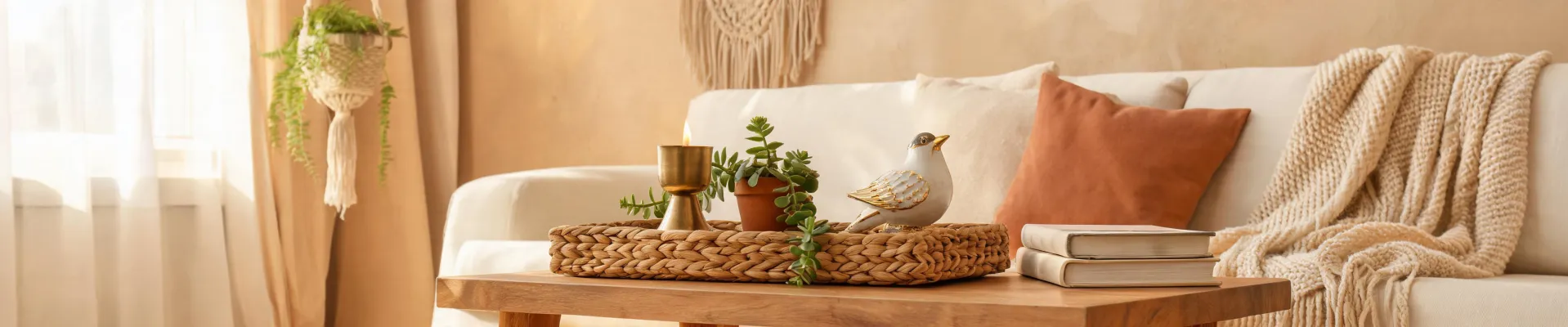
Yes, candle warmers melt wax. But that's not the question you should be asking.
The real question is whether a candle warmer belongs in your Mackenzie-Childs corporate gift order. And the answer depends entirely on your scenario. Maybe you're buying a single trinket dish for a client. Maybe you're ordering 200 votive candles for a holiday event. Or maybe you're trying to build a bundled "warm the wax" gift set and wondering how to do it without ruining a nice piece of decor.
I've been the person making those calls for eight years. In that time, I've documented 22 significant mistakes — roughly $47,000 in wasted budget, an embarrassing Q3 delivery delay, and more than a few "what was I thinking" moments. Candle warmers have caused three of those mistakes. Here's what I wish someone had explained to me.
What a candle warmer actually does
Candle warmers heat wax from above or below until it melts and releases fragrance. No wick, no flame, no smoke. That's the simple answer to "do candle warmers melt wax?" — yes, they do, and they do it reliably.
But there's a catch. Plate warmers I've tested keep wax between 130°F and 170°F, and the melt pool can be fairly shallow. Top-down bulb warmers produce a bigger pool more quickly, but they also reheat the same wax over and over, which fades the scent faster. That matters when you're placing a hand-painted ceramic piece on top of a warmer and expecting it to look beautiful for months.
The real question: which scenario are you in?
When I first started adding warmers to corporate gifts, I assumed every set needed one. Brighter gift, happier client, right? Three expensive returns later, I changed my mind. The answer splits into three scenarios.
Scenario 1: One high-end gift to one important recipient
If you're gifting a single Mackenzie-Childs trinket dish, vase, or figurine to an executive or long-term client, a warmer can be a thoughtful finishing touch. The recipient will likely display the piece, and a warmer lets them enjoy the scent without watching a lit candle.
Two lessons from my own experience:
- Check the care notes before you add heat. The hand-painted finish on most Mackenzie-Childs pieces is durable, but I've seen bubbling on a non-Mackenzie-Childs piece after seven hours on a cheap warmer. I wouldn't risk a $150 gift on a $12 warmer.
- Buy a warmer with auto shut-off. In 2022, a gift recipient left one running overnight. The wax melted down the side and stained a walnut desk. The warmer worked; the gift set just wasn't designed for real-world mistakes.
In this scenario, spend a little more on a quality warmer. It's a small percentage of the total gift, and it shows you thought through the experience. At least, that's been my experience with 40-plus single-recipient gifts.
Scenario 2: Bulk corporate gifts or event favors
Here's the counterintuitive part: for bulk orders, skip the warmer.
I know, I know. The whole point of a warmer is to avoid open flames, which sounds like a clear win for corporate safety. But at scale, warmers create their own problems — breakage, storage, electric cords, and desk clutter.
In April 2023, we quoted a client on 120 Mackenzie-Childs votive candles and 120 trinket dishes for a sales conference. The client originally wanted a warmer for every dish. I ran the math: 120 warmers at $8 each came to $960 — no, $920, I'm mixing it up with the $180 freight line. Either way, we were adding roughly $1,100 to the project before we even talked about packaging.
Then we tested ten cheap warmers. Two died within three weeks. A 20% failure rate on an item you're giving to your most important customers? That's a risk I couldn't justify. We removed the warmers, upgraded the candles, and donated the budget to a nicer unboxing experience. The client was happier.
If you're ordering more than 50 units, your real enemies are breakage and logistics, not flames. The candle itself is the gift. Warmers multiply weight, packaging, and failure points.
Scenario 3: A bundled set — warmer plus candle plus dish
This is the "complete experience" approach: a warmer, a votive candle, and a decorated dish that catches the wax. It works, but only if you test the exact combination before you commit.
Here's my most painful example. In September 2024, we submitted a $3,200 order for 40 gift sets. Each set had a warmer, a candle, and a hand-painted trinket dish from a decorative brand. I checked the dish diameter against the candle size — they matched perfectly. But I didn't check the warmer's wattage against the dish's glaze.
Three days after delivery, a client emailed a photo of a hairline crack in the dish's base. The warmer concentrated heat in the center, expanding the glaze faster than the ceramic. It looked fine when it arrived, but thermal stress did the damage over a few hours. That was a $3,200 lesson about testing.
Since then, I test every new combination for six hours: warmer on, candle in place, dish on top. Then I turn the dish over and look for clouding, crazing, or discoloration. That test saved our next 50-unit rollout, and it's the only reason we delivered in time for the client's December event.
One more thing for this scenario: if your deadline is firm, pay for guaranteed delivery. In November 2024, we paid $380 to expedite a $12,000 Mackenzie-Childs order because the standard "estimated" arrival would have landed two days after the client's holiday party. That $380 bought certainty, not just speed. When the gift misses the event, the reprint, reship, and credibility costs dwarf the rush fee.
How to figure out your scenario before you order
Still not sure? Use my four-question checklist:
- How many units? Under 10, a warmer is worth considering. Over 50, seriously reconsider it.
- Where will the gift live? A desk with outlet access? Or a conference room with strict electrical policies?
- Is the candle the star, or is the dish the star? If the dish is the star, the warmer might be a distraction.
- What's your deadline? When the date is fixed, shift from "lowest cost" to "guaranteed delivery."
The last one took me years to learn. Emergency situations justify paying more for certainty — people have told me I'm overreacting when I recommend expedited shipping, but I'd rather spend $380 than explain why 200 Christmas gift boxes arrived on December 27th.
Mistakes I won't repeat
If you're planning a "christmas mackenzie childs" gift program for your clients, here's my short pre-check list:
- Confirm the candle diameter against the dish's inner base. A 3-inch votive candle fits a 4-inch dish; a 4-inch pillar doesn't.
- Test the warmer with the actual candle and dish, not just the product photos.
- Read the care label on every Mackenzie-Childs piece before assuming it's heat-safe.
- Budget for expedited shipping when your event date is non-negotiable.
Personally, I still like candle warmers. They're a thoughtful addition to the right gift at the right scale. But "right" changes depending on quantity, environment, and calendar. That's not a flaw in the product — it's just the reality of buying mackenzie childs decor for a corporate program.
If you have a specific question about a warmer and a trinket dish, test it before you answer. And if you're on a tight deadline, pay for the certainty. You'll sleep better — and so will your wax.

Elise Laurent
Elise Laurent is a crystal and decorative glass quality analyst covering crystal figurines, vases, ornaments, suncatchers, and gift glassware. She examines ISO 6486-1 where food-contact glass dinnerware applies, then uses polarized strain inspection, dimensional checks, surface-defect grading, and refractive clarity to compare decorative pieces outside that scope. Her work helps sourcing teams choose materials, finishing routes, and protective packaging without confusing visual brilliance with verified durability.
Leave a Reply